Specifying the wrong drywall finish level is one of the most common -- and most expensive -- mistakes in commercial construction. Over-specify and you waste thousands on unnecessary labor. Under-specify and you end up with callbacks, repainting disputes, and unsatisfied building owners. This guide walks through each finish level defined by the Gypsum Association's GA-214 standard and helps you match the right level to every surface in your project.
Understanding the GA-214 Finish Level System
The Gypsum Association publishes the GA-214 standard, "Recommended Levels of Gypsum Board Finish," which defines six distinct finish levels numbered 0 through 5. These levels were established to create a common language between architects, general contractors, and drywall subcontractors. Without this standard, terms like "smooth finish" or "paint-ready" mean different things to different people -- a recipe for disputes.
Each level builds on the previous one. Level 0 is the least finished, Level 5 is the most refined. The cost difference between Level 0 and Level 5 can range from $0.50 to $2.00 per square foot of wall area, so getting the specification right has real budget implications on a large commercial project.
What are drywall finish levels 0 through 5?
Drywall finish levels range from Level 0 (no finishing) to Level 5 (skim coat over entire surface). Level 1 adds tape embedded in joint compound. Level 2 adds a coat over fasteners and accessories. Level 3 adds additional coats with light sanding. Level 4 adds extra coats over flat joints with full sanding. Level 5 applies a thin skim coat over the entire surface for the smoothest possible finish. Each level is defined by the Gypsum Association's GA-214 standard.
Level 0: No Finishing
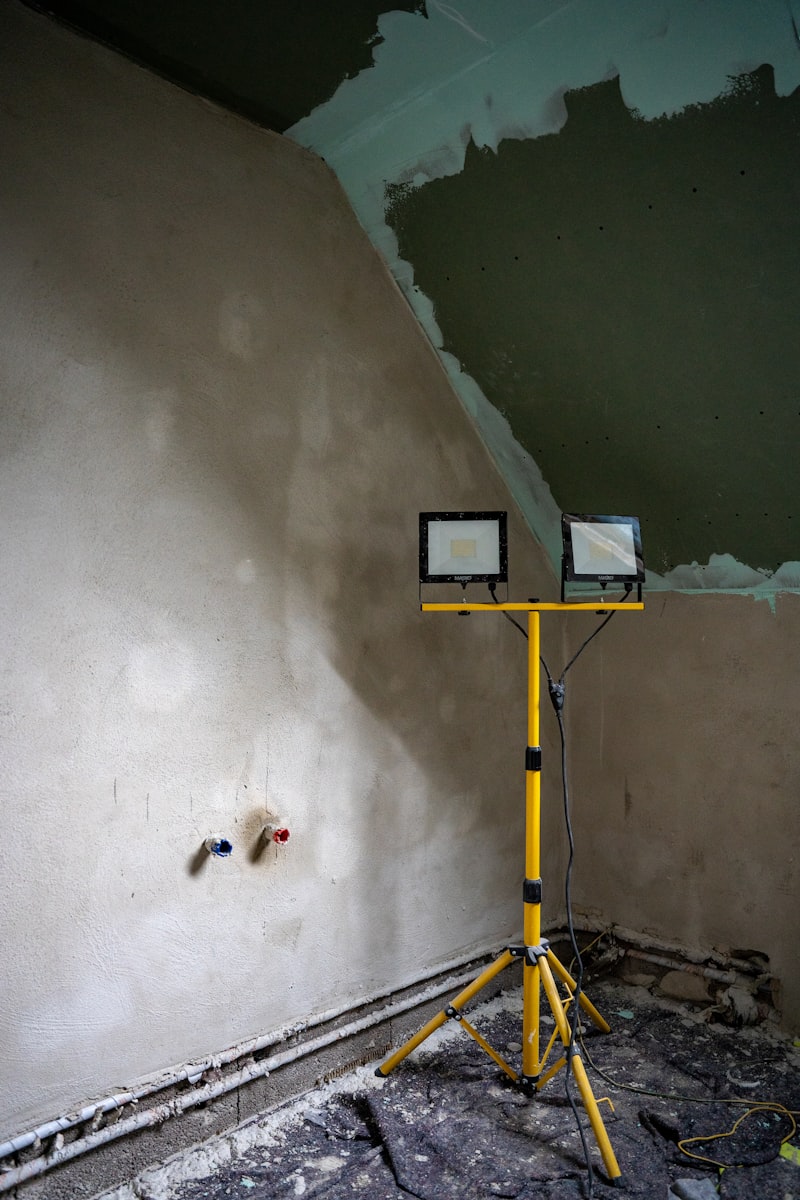
Level 0 means the gypsum board is hung but receives no taping, mudding, or finishing of any kind. No joint compound is applied to joints, fastener heads, or accessories.
When to Specify Level 0
- Temporary construction -- Dust barriers, temporary partitions, or mock-up walls that will be removed before project completion.
- Concealed spaces -- Areas above hard-lid ceilings where the drywall serves only as a fire or smoke barrier and will never be visible. However, confirm with your local AHJ (Authority Having Jurisdiction) whether fire-rated assemblies require taping even in concealed spaces.
Level 0 is rarely specified in commercial work because most applications require at least taped joints for fire-rating compliance. Use it only when you are certain the drywall serves a purely structural or temporary function.
Level 1: Tape Only
Level 1 requires all joints and interior angles to have tape embedded in joint compound. Excess compound is removed, but no additional coats are applied. The tape may be visible, and tool marks, ridges, and fastener heads remain exposed.
When to Specify Level 1
- Plenum areas -- Above ceilings in commercial buildings where fire and smoke containment is required but the surface is concealed.
- Parking garages -- Where fire-rated separation is needed but aesthetic finish is irrelevant.
- Mechanical and electrical rooms -- Service areas that will never receive a decorative finish.
Level 1 costs approximately $0.15 to $0.25 per square foot above Level 0. It satisfies fire-rating requirements while keeping costs minimal in areas the building occupants will never see.
Level 2: Tape Plus One Coat
Level 2 adds a thin coat of joint compound over embedded tape at flat joints, interior angles, and accessories. Fastener heads receive one coat. The surface is left unfinished -- tool marks and ridges are acceptable.
When to Specify Level 2
- Behind tile -- Substrate for ceramic tile, stone, or other opaque wall coverings where the drywall surface will never be visible.
- Behind heavy wall coverings -- Commercial vinyl wallcovering rated at 20 oz/yd or heavier will conceal Level 2 imperfections.
- Warehouse and storage spaces -- Where a basic functional wall is needed but appearance is not a concern.
What drywall finish level is needed behind tile?
Level 2 drywall finish is appropriate behind ceramic tile, stone, or other opaque wall coverings. Level 2 provides tape embedded in joint compound plus one coat over joints and fasteners. Since the wall covering completely conceals the drywall surface, the additional smoothing of Levels 3 through 5 provides no benefit and adds unnecessary cost.
Level 3: Two Coats, Light Sanding
Level 3 adds a second coat of joint compound over tape at flat joints and a third coat over interior angles. All fastener heads receive two coats. The surface is lightly sanded to remove tool marks and ridges, but texture may still be visible under glancing light.
When to Specify Level 3
- Surfaces receiving heavy texture -- Knockdown, orange peel, or heavy spray textures with coverage heavy enough to mask minor surface imperfections.
- Under medium-weight wall coverings -- Commercial wallcovering rated 7 to 20 oz/yd may require Level 3 depending on the material's opacity.
Level 3 is a common specification for corridors, break rooms, and back-of-house areas that will receive a textured finish. It strikes a balance between cost and quality where perfect smoothness is not required.
Level 4: Three Coats, Full Sanding
Level 4 is the most commonly specified finish level for commercial interiors. Flat joints receive three coats of compound, interior angles receive two coats, and fastener heads receive three coats. All surfaces are fully sanded smooth.
When to Specify Level 4
- Painted surfaces with flat or eggshell paint -- Level 4 is adequate for most painted applications where lighting conditions are moderate.
- Light-weight wall coverings -- Coverings under 7 oz/yd that require a smoother substrate.
- Standard office interiors -- Private offices, conference rooms, and common areas with standard fluorescent or LED ambient lighting.
Level 4 is the industry default for "paint-ready" surfaces. However, it has an important limitation: under critical lighting conditions -- such as windows with direct sunlight, track lighting aimed at walls, or glossy paint sheens -- the slight differences in surface texture between the joint compound and bare gypsum board face paper can show through as banding or photographing. This is where Level 5 becomes necessary.
What is the difference between Level 4 and Level 5 drywall finish?
Level 4 includes three coats of joint compound on flat joints and fasteners with full sanding, suitable for most painted surfaces under moderate lighting. Level 5 adds a thin skim coat of joint compound over the entire wall surface, eliminating the texture difference between mudded joints and bare drywall. Level 5 costs $0.30 to $0.50 per square foot more than Level 4 but prevents banding and photographing under critical lighting, glossy paint, or dark colors.
Level 5: Skim Coat (The Premium Finish)
Level 5 is the highest finish level. After completing Level 4, a thin skim coat of joint compound -- or a proprietary Level 5 coating product -- is applied over the entire surface. This creates a uniform texture and porosity across the wall, eliminating the differences between joint compound areas and the gypsum board face paper.
When to Specify Level 5
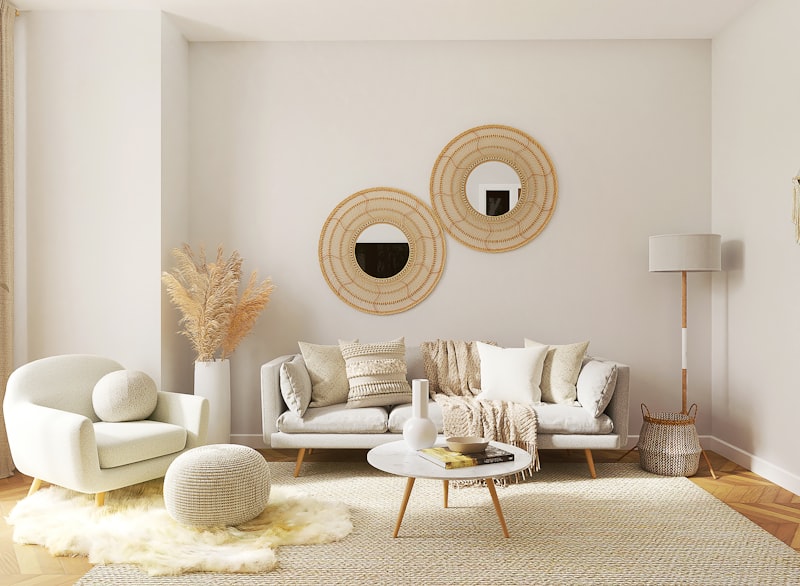
- Critical lighting conditions -- Lobby walls with floor-to-ceiling windows, gallery-style lighting, or any surface receiving direct or raking light that would reveal surface imperfections.
- Gloss and semi-gloss paint -- Higher sheen paints amplify surface texture differences. Level 5 is essential for any paint sheen above eggshell.
- Dark paint colors -- Dark walls are more susceptible to photographing and banding effects. Navy, charcoal, deep red, and similar colors should always be applied over Level 5.
- Executive suites and lobby areas -- High-visibility spaces where the building owner expects a premium appearance.
- Healthcare and laboratory settings -- Where hygiene requirements demand perfectly smooth, washable surfaces.
Level 5 adds $0.30 to $0.50 per square foot over Level 4. On a 50,000 SF office buildout, specifying Level 5 throughout instead of Level 4 could add $15,000 to $25,000 to the drywall budget. That is why targeted specification is important -- specify Level 5 where conditions demand it, and use Level 4 everywhere else.
Cost Comparison by Finish Level
The following ranges represent national averages for labor and material costs associated with each finish level. Actual costs vary by region, project scale, and market conditions.
- Level 0: $0.00/SF (board hung, no finish)
- Level 1: $0.15 - $0.25/SF
- Level 2: $0.25 - $0.40/SF
- Level 3: $0.40 - $0.65/SF
- Level 4: $0.65 - $1.00/SF
- Level 5: $1.00 - $1.50/SF
These costs are for the finishing portion only -- gypsum board material, framing, and hanging labor are separate line items. On a typical commercial project, finish labor represents 40 to 60 percent of the total drywall subcontract value.
How much does each drywall finish level cost?
Drywall finish costs per square foot range from $0.15-$0.25 for Level 1 (tape only) to $1.00-$1.50 for Level 5 (full skim coat). Level 4, the most common commercial specification, costs $0.65-$1.00/SF. Finish labor typically represents 40 to 60 percent of the total drywall subcontract value. Targeted specification -- using Level 5 only where critical lighting demands it -- optimizes budget without sacrificing quality.
Common Specification Mistakes
Mistake 1: Specifying Level 5 Everywhere
Architects sometimes default to Level 5 on all surfaces "just to be safe." This adds significant cost in areas where it provides zero visible benefit -- back-of-house corridors, mechanical rooms, and surfaces behind cabinetry or millwork. A smarter approach is to create a finish schedule that maps each wall surface to the appropriate level based on visibility, lighting, and final finish material.
Mistake 2: Specifying Level 4 Under Critical Lighting
The opposite mistake: trying to save money by specifying Level 4 in a lobby with floor-to-ceiling glass. The banding and photographing that results leads to callbacks, repainting disputes, and sometimes full rework. The $0.30-$0.50/SF premium for Level 5 in these areas is always cheaper than remediation after the fact.
Mistake 3: Not Specifying a Level at All
When the spec documents say "smooth finish" without referencing a GA-214 level, the drywall subcontractor and the general contractor may have very different expectations. Always reference the specific level number in your specifications and on the drawings.
Best Practices for Specification
- Create a room-by-room finish schedule that maps each space to its required finish level based on lighting conditions, paint sheen, and final finish material.
- Mark Level 5 areas on the drawings so the drywall subcontractor can plan crew allocation and material procurement accordingly.
- Require a mock-up panel for Level 5 areas before full production begins. This establishes the quality standard and prevents disputes about what "skim coat" means.
- Coordinate with the painting subcontractor to confirm that specified paint sheens align with the specified finish levels.
- Include finish level in the subcontract rather than relying on spec references that may be ambiguous or overlooked during bidding.
The Bottom Line
Drywall finish levels exist to eliminate ambiguity and protect everyone involved in the project -- the building owner, the GC, the architect, and the drywall subcontractor. Specifying the right level for each surface ensures quality where it matters, avoids unnecessary cost where it does not, and prevents the callbacks and disputes that arise when expectations are unclear.
The key is targeted specification. Use Level 1 or 2 in concealed and utility spaces. Use Level 3 under heavy textures. Specify Level 4 as your default for painted surfaces under moderate lighting. And invest in Level 5 wherever critical lighting, glossy paint, or high-visibility demands the smoothest possible finish.