Specifying the wrong drywall finish level is one of the most expensive mistakes in commercial construction. Over-specifying wastes money. Under-specifying leads to callbacks, repainting, and client dissatisfaction. This guide breaks down all six drywall finish levels per ASTM C840 and the Gypsum Association's GA-214 standard, with a detailed comparison of Level 4 versus Level 5 -- the two levels that generate the most confusion and the most disputes on commercial projects.
Understanding the Six Drywall Finish Levels
The Gypsum Association defines six finish levels (0 through 5) that establish a common language for architects, general contractors, and drywall subcontractors. Each level builds on the previous one, adding progressively more labor and material.
What are the drywall finish levels 0 through 5?
Drywall finish levels range from Level 0 (no finishing) to Level 5 (skim coat over entire surface). Level 1 covers tape embedded in joint compound. Level 2 adds a coat over fasteners and accessories. Level 3 adds a second coat. Level 4 adds a third coat. Level 5 adds a full skim coat for the smoothest possible surface. These levels are defined by ASTM C840 and GA-214.
| Level | Description | Typical Use | Approx. Cost/SF |
|---|---|---|---|
| Level 0 | No taping, finishing, or accessories required | Temporary construction, areas above ceilings where no finish is specified | $0.00 |
| Level 1 | Tape embedded in joint compound at joints and interior angles; no tool marks need to be covered | Above ceilings in non-public areas, plenum barriers, smoke and fire barriers where only a tape coat is specified | $0.15 - $0.25 |
| Level 2 | Level 1 plus one coat of compound over fasteners, accessories, and beads; knife marks and ridges acceptable | Garages, warehouses, storage areas; substrate for tile in water-resistant applications | $0.30 - $0.45 |
| Level 3 | Level 2 plus an additional coat on joints, angles, fasteners, and accessories; compound smooth and free of tool marks | Areas receiving heavy or medium-weight textured finishes; not intended for smooth surfaces or light textures | $0.55 - $0.70 |
| Level 4 | Level 3 plus an additional (third) coat on joints, angles, fasteners, and accessories; compound smooth | Areas with flat paint, light textures, or wallcovering; the most common commercial finish level | $0.75 - $1.00 |
| Level 5 | Level 4 plus a thin skim coat of joint compound or proprietary material over the entire surface | Areas with critical lighting, high-gloss or semi-gloss paint, enamel finishes, or non-textured flat paint in well-lit spaces | $1.10 - $1.50 |
Level 4: The Commercial Workhorse
Level 4 is the most commonly specified finish level in commercial construction. It requires three separate coats of joint compound over tape, fasteners, and accessories, sanded smooth between coats. When properly executed, Level 4 produces a surface that is free of tool marks and ready for most paint applications and wall coverings.
When Level 4 Is Sufficient
- Textured finishes: Any wall receiving orange peel, knockdown, or skip-trowel texture only needs Level 4 (or even Level 3 for heavier textures). The texture hides any minor imperfections.
- Wallcovering: Vinyl wallcovering, fabric wallcovering, and most commercial wall treatments adhere properly to a Level 4 surface and mask the joint-to-field differential.
- Flat paint in standard lighting: In rooms with diffused overhead lighting and no significant natural light sources, Level 4 under flat or matte paint performs well.
- Back-of-house areas: Storage rooms, mechanical rooms, and utility corridors that still require a finished appearance but will not have critical viewing conditions.
When is Level 4 drywall finish sufficient for commercial projects?
Level 4 drywall finish is sufficient for walls receiving textured finishes, wallcovering, or flat paint in rooms with standard diffused lighting. It is the most common commercial specification and works well in offices, corridors, and tenant spaces that will not have critical lighting conditions or high-gloss paint applications.
Level 5: The Premium Standard
Level 5 takes a completed Level 4 surface and adds one final step: a thin skim coat of joint compound (or a proprietary Level 5 coating product) applied over the entire wall surface. This creates a uniform texture and porosity across the entire panel -- not just at the joints and fastener locations -- eliminating the visible difference between the finished joints and the paper face of the gypsum board.
That difference in porosity and texture is called joint photographing or joint banding. Under certain lighting conditions, even a perfectly executed Level 4 finish will show visible joint lines after painting because the compound absorbs paint differently than the paper face of the board. Level 5 eliminates this problem entirely.
When Level 5 Is Required
- Critical lighting conditions: Spaces with large window walls, skylights, or raking light from accent fixtures. Side-lighting from floor-to-ceiling windows is the most demanding condition for drywall finishes.
- High-gloss or semi-gloss paint: Glossy finishes act like a magnifying glass for surface imperfections. Any wall receiving gloss, semi-gloss, or enamel paint should be Level 5.
- Non-textured flat paint in well-lit spaces: Even flat paint will show joint banding in spaces with strong directional light. Conference rooms, lobbies, and executive suites with significant natural light need Level 5.
- Dark or bold paint colors: Deep colors amplify the visibility of surface irregularities. A dark navy accent wall in a conference room needs Level 5 even if the adjacent white walls could get by with Level 4.
- Large unbroken wall expanses: Corridors, atria, and open-plan spaces with long, uninterrupted wall runs give the eye more surface area to detect imperfections.
When is Level 5 drywall finish required?
Level 5 drywall finish is required in spaces with critical lighting from large windows or accent fixtures, under high-gloss or semi-gloss paint, for dark or bold paint colors, and on large unbroken wall surfaces. The skim coat creates uniform surface porosity that prevents joint photographing, which is visible joint banding caused by differential paint absorption.
The Cost Difference: Level 4 vs Level 5
The skim coat step in Level 5 adds approximately $0.30 to $0.50 per square foot to the drywall finishing cost. That may sound modest, but it adds up quickly on larger projects.
| Project Size (Wall SF) | Level 4 Cost | Level 5 Cost | Premium |
|---|---|---|---|
| 10,000 SF | $7,500 - $10,000 | $11,000 - $15,000 | $3,000 - $5,000 |
| 50,000 SF | $37,500 - $50,000 | $55,000 - $75,000 | $15,000 - $25,000 |
| 200,000 SF | $150,000 - $200,000 | $220,000 - $300,000 | $60,000 - $100,000 |
However, the real cost question is not Level 5 versus Level 4. It is Level 5 versus the cost of repainting, re-finishing, or dealing with an unhappy building owner who can see every joint line in their new lobby. Remediation after the fact -- stripping paint, skim coating, and repainting -- can cost 3 to 5 times more than specifying Level 5 from the beginning.
The Level 5 Application Process
Understanding how Level 5 is applied helps explain why it costs more and why it is worth it in the right conditions.
Step 1: Complete Level 4 Finish
All joints, fasteners, and accessories must receive three coats of joint compound, sanded smooth. The Level 4 surface must pass inspection before the skim coat is applied.
Step 2: Apply the Skim Coat
A thin, uniform coat of joint compound or a proprietary Level 5 coating product is applied over the entire wall surface using a roller, spray rig, or trowel. The material is then knocked down or smoothed to create a consistent texture. Many contractors prefer proprietary products like USG's Sheetrock Brand Level 5 Compound because they are formulated for easier application and superior uniformity.
Step 3: Sand and Inspect
After drying, the skim coat is lightly sanded to remove any imperfections. The surface is then inspected under both ambient and raking light conditions to verify uniformity before priming.
Step 4: Prime
A high-quality PVA or drywall primer is applied to seal the skim coat. This step is critical -- the primer must be compatible with the skim coat material and the finish paint system. Skipping primer or using the wrong product will undermine the entire Level 5 investment.
How is a Level 5 drywall finish applied?
Level 5 drywall finish starts with a complete Level 4 surface. A thin skim coat of joint compound or proprietary Level 5 material is then applied over the entire wall using a roller, spray rig, or trowel. After drying, the surface is sanded smooth and inspected under raking light. A compatible PVA or drywall primer seals the surface before paint.
Specifying the Right Level: A Practical Approach
The most cost-effective approach is rarely all-Level-4 or all-Level-5. Smart specifications use a hybrid strategy that matches the finish level to the conditions in each area of the building.
Hybrid Specification Example
- Level 5: Main lobby, reception areas, conference rooms, executive offices, corridors with significant natural light, any area specified with semi-gloss or gloss paint
- Level 4: Standard office spaces with diffused lighting, corridors without natural light, break rooms, back-of-house areas receiving flat paint
- Level 3: Areas receiving heavy texture, storage rooms, mechanical rooms that require a finished appearance
- Level 2: Garages, utility areas, spaces above ceilings that serve as fire barriers
This approach can reduce overall finishing costs by 15 to 25 percent compared to specifying Level 5 across the board, while still delivering a premium result where it matters most.
Tips for Avoiding Disputes
- Specify finish levels on drawings, not just in the spec book. Call out the level on each room or area in the finish schedule. Ambiguity leads to disputes.
- Address lighting conditions early. If the architect has not finalized the lighting plan, flag any spaces with large window walls or accent lighting as potential Level 5 areas.
- Get a separate line item. Ask your drywall subcontractor to price Level 4 and Level 5 as separate line items so you can adjust areas during construction without renegotiating the entire contract.
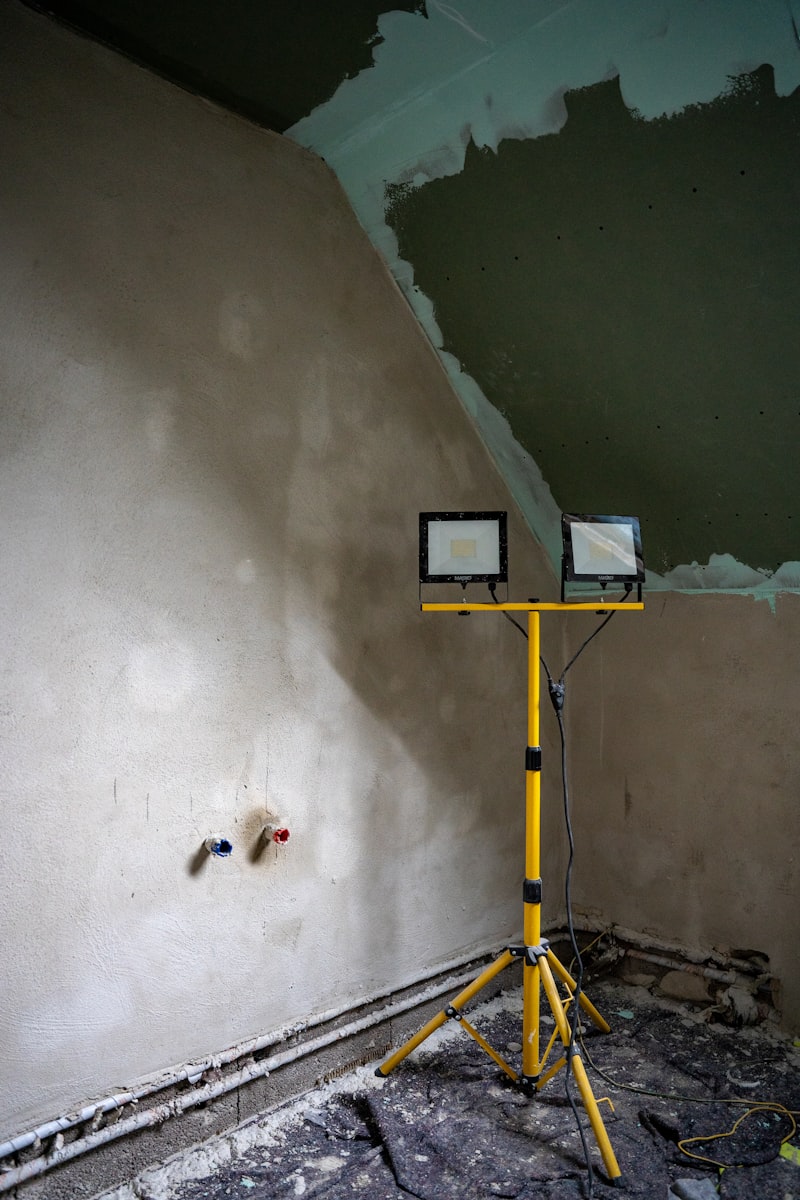
- Inspect before painting. Conduct a formal drywall finish inspection using a strong sidelight or portable floodlight before the painter starts. It is exponentially cheaper to fix finishing defects before paint than after.
How do you choose between Level 4 and Level 5 drywall finish?
Choose Level 5 for spaces with critical lighting, high-gloss paint, dark colors, or large unbroken walls. Use Level 4 for textured finishes, wallcovering, or flat paint in standard lighting. The best approach is a hybrid specification that assigns finish levels by room based on lighting conditions and wall treatments, reducing costs 15 to 25 percent versus all-Level-5.
The Bottom Line
The difference between Level 4 and Level 5 is a thin skim coat that costs $0.30 to $0.50 per square foot. But the difference in outcome can be dramatic: a lobby that looks like a showroom versus one where every joint line glows under the morning sun.
Specify based on lighting conditions and finish type, not on budget alone. Use a hybrid approach that puts Level 5 where it matters and Level 4 where it is sufficient. And always -- always -- inspect the drywall finish before your painter shows up. Your building owner will thank you.